
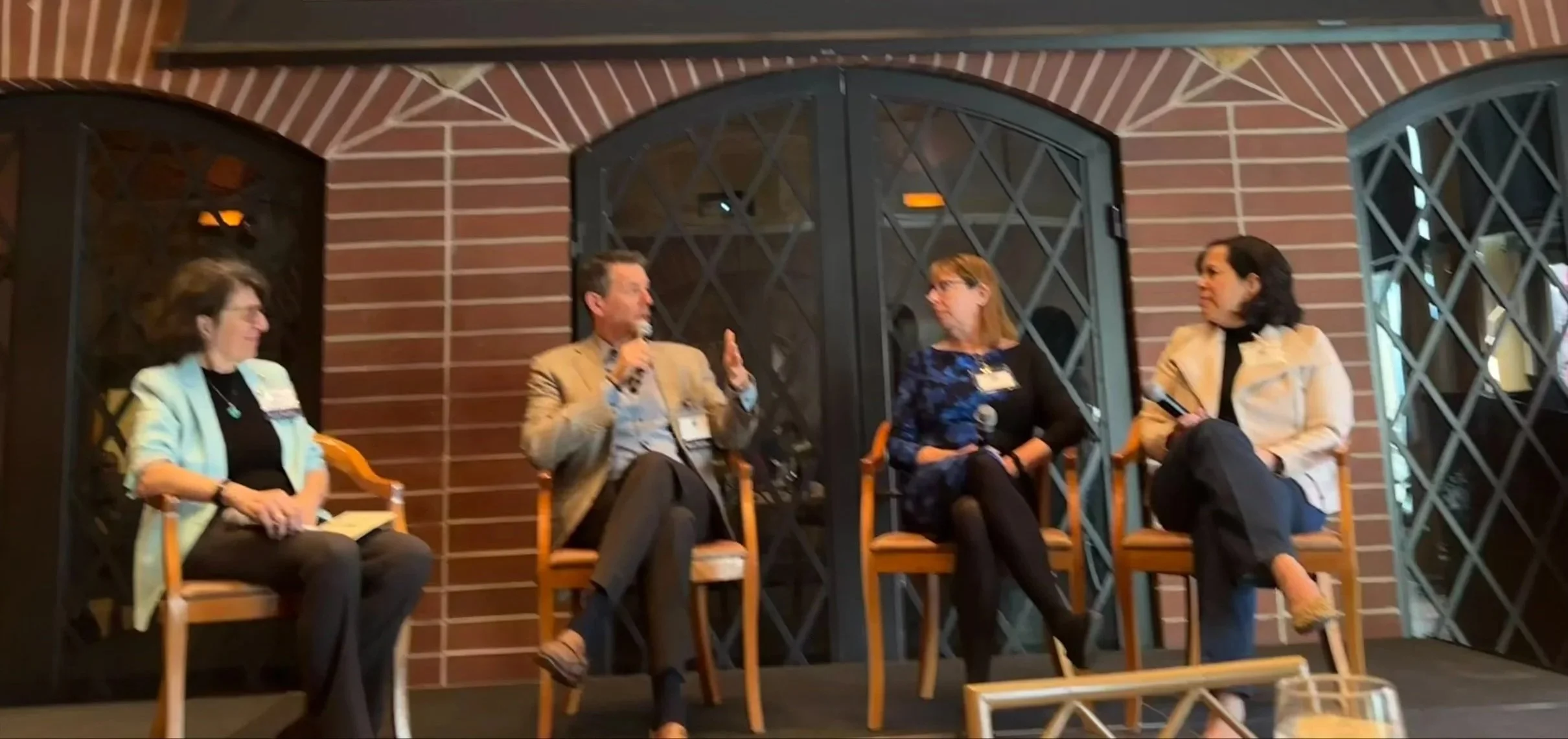
“OptimizIng the Hybrid Workplace,” Rocky Mountain People and Strategy, March 5, 2026
Over the past few years, the question of where work should happen has become one of the most visible debates in organizational life.
The COVID-19 pandemic delivered a massive external shock to how work is organized. In a matter of weeks, millions of employees moved from offices to remote work. Since then, organizations have been experimenting — some returning employees to the office, others embracing hybrid arrangements, and still others moving toward remote-first models.
It’s worth remembering that hybrid work itself is not entirely new. Many professions have operated in hybrid ways for decades, even if we didn’t call it that. In academia, for example, professors have long worked partly in the office — teaching classes and attending meetings — and partly elsewhere while grading papers, conducting research, or writing.
What is new is the scale of hybrid work and the number of employees experiencing it simultaneously.
Earlier this month I had the opportunity to participate in a panel hosted by Rocky Mountain People and Strategy on optimizing the hybrid workplace. I represented the Daniels College of Business at the University of Denver, where our Department of Management serves as the academic sponsor of RMPS and where these sessions are hosted in our space.
Preparing for that discussion pushed me to do something important: stress-test my own assumptions about hybrid work against the research.
Over several weeks, I reviewed a large number of studies examining how remote and hybrid work affect organizations. I focused primarily on academic research published since 2021, along with practitioner work appearing in outlets such as Harvard Business Review, MIT Sloan Management Review, and California Management Review.
What I found was both enlightening and perplexing.
I went into that process with some biases. My instinct has been that hybrid work is largely here to stay and that many recent return-to-office mandates may be reacting to frustration more than evidence. But I wanted to see what the research actually says.
Because hybrid work isn’t simply a workplace policy—it’s a leadership challenge. And when you step back and look at the growing body of research on remote and hybrid work, the conclusion isn’t that it universally succeeds or fails. It’s that outcomes depend heavily on how leaders design and manage the system around it.
During the panel discussion, I described the situation with a metaphor that seemed to resonate. The pandemic forced many organizations to add what I called a “bonus room” onto their existing organizational house. The problem is that most of those houses were originally designed for a world in which work happened primarily in the office. Adding the room was necessary—but it also changed the architecture of the entire structure.
That realization is what led me to step back and review the research more systematically.
What the Research Actually Says
Over the past several weeks I reviewed research examining the effects of remote and hybrid work on several topics that leaders consistently raise: productivity, work–life balance, well-being, collaboration, creativity, fairness, and organizational culture.
My review focused primarily on academic research published since 2021, with a few earlier foundational studies included where relevant. I also tended to prioritize highly cited articles, since those studies have typically shaped the academic conversation most strongly. In addition to academic journals, I reviewed practitioner analyses published in outlets such as Harvard Business Review, MIT Sloan Management Review, and California Management Review. Those practitioner pieces were also useful for surfacing recurring leadership themes around fairness, well-being, creativity, productivity, and the broader management challenge of hybrid work (Mortensen & Haas, 2021; Subel et al., 2022; Heng & Chua, 2024; Blavo et al., 2023; Cappelli & Nehmeh, 2025).
One additional caveat is worth mentioning. Good empirical research takes time. Studies must be designed, conducted, analyzed, and then move through the academic publication process. As a result, some of the studies we have today examine data from the early stages of the pandemic—often around 2020 or 2021. That was a very unusual moment in the world of work, and those findings may not fully represent the environment organizations are operating in today.
Rather than attempting a formal literature review, what follows is simply what I found most striking (but representative) as I worked through this research.
Individual Employee Productivity
Productivity is often the first concern raised when organizations consider remote or hybrid work.
Here the evidence is genuinely mixed.
Some studies find productivity increases when employees work remotely, particularly for tasks that require sustained focus and limited interruptions (Bloom et al., 2015; Choudhury et al., 2021). Eliminating commuting time and reducing workplace distractions can allow employees to devote more time to concentrated work.
However, other research suggests productivity may decline when work requires extensive coordination across teams (Yang et al., 2022). Communication delays, reduced informal interaction, and fragmented collaboration can slow teams down.
Another important nuance in this literature is that some productivity gains may partly reflect employees working longer hours when working remotely rather than becoming more efficient.
One consistent positive finding relates to retention. Flexible work arrangements appear to reduce employee turnover in some contexts (Bloom et al., 2015; Bloom et al., 2024). For organizations, improved retention can represent a meaningful productivity benefit in its own right.
Some practitioner research also raises cautionary notes. For example, Peter Cappelli and Ranya Nehmeh writing in Harvard Business Review argue that a growing body of evidence points to performance problems when hybrid systems are left under-designed.
Work-Life Balance
One of the clearest findings in the literature is that flexible work arrangements can improve work–life balance for many employees.
Reducing or eliminating commuting time plays a major role here. Even partial remote work can return several hours each week to employees’ personal lives (Aksoy et al., 2023).
At the same time, the research highlights an important tension. Remote work can blur the boundary between professional and personal life. Some employees report working longer hours or finding it difficult to disconnect from work when their workspace is also their home (Allen et al., 2021; Shirmohammadi et al., 2022).
In other words, flexibility can improve work–life balance—but only when employees and organizations actively manage boundaries.
Well-Being and Loneliness
Another common concern about remote work is whether it increases loneliness.
Here again the evidence is mixed. Some employees report improved well-being due to increased autonomy and flexibility. Others report greater social isolation when work relationships weaken (O’Hare et al., 2024).
Hybrid arrangements appear to mitigate some of these effects by preserving periodic in-person interaction. But the research also suggests that connection does not emerge automatically. Organizations must actively cultivate it. Practitioner work in MIT Sloan Management Review points in a similar direction, arguing that leaders can improve well-being by helping remote employees structure their workdays more effectively (Subel et al., 2022).
Collaboration and Innovation
Research examining collaboration patterns suggests that remote work changes how employees interact.
Studies analyzing digital communication networks have found that strong relationships within teams often remain intact. However, weaker ties across departments frequently decline (Yang et al., 2022).
Those weaker ties are often important sources of information flow and cross-boundary collaboration. When they weaken, organizations may become more siloed.
Hybrid systems therefore need to find ways to recreate the kinds of informal interactions that used to happen naturally in offices.
Innovation research raises another interesting concern.
Studies examining patent and scientific collaboration data suggest that remote collaboration may produce fewer breakthrough ideas (Lin et al., 2023). Innovation often emerges from unexpected interactions between colleagues who would not normally work together.
When those interactions decline, organizations may generate fewer novel ideas.
This does not mean remote teams cannot innovate—but it does suggest organizations may need to design environments intentionally to support idea generation. Practitioner work in California Management Review reinforces that point, arguing that remote work may stifle creativity when people lose opportunities to share and develop emerging ideas together (Heng & Chua, 2024).
Fairness and Equity
Hybrid work also introduces important questions about fairness.
Flexible work arrangements can increase opportunities for some employees, including caregivers and people with disabilities. At the same time, some research suggests that employees who work remotely may face location-based career penalties or reduced visibility (Möller et al., 2024).
Hybrid systems can also create tension when some roles allow remote work and others do not. At a broader level, access to remote work is itself uneven across the labor market, with lower-income workers much less likely to have jobs that can be done remotely (Mongey et al., 2021).
Organizations can mitigate these risks through clear performance metrics, thoughtful HR practices, and transparency—but fairness issues rarely resolve themselves without deliberate effort.
Organizational Culture
One thing I had hoped to find—but did not—was research comparing organizational culture across companies that have adopted different workplace models.
In other words, I did not find studies that compared fully in-person organizations, hybrid organizations, and remote-first organizations at the organizational level of analysis.
That absence did not surprise me. Studies of that kind would be extremely difficult to conduct. Measuring organizational culture across companies and isolating the effects of work arrangements would be methodologically challenging.
Still, the mechanisms through which culture develops—shared experiences, informal interaction, and social learning—are clearly affected when employees spend less time physically together. Studies of collaboration networks and practitioner analyses of hybrid work’s challenges point in that direction, even if they do not directly measure culture as a whole (Yang et al., 2022; Haas, 2022; Cappelli & Nehmeh, 2025).
Maintaining strong organizational cultures in hybrid environments likely requires greater intentional leadership effort.
Insights from My Own Practice
A few insights emerged for me while reviewing this research that come less from the research literature itself and more from my experience working with organizations.
Across multiple clients currently wrestling with their remote and hybrid work arrangements, one observation keeps surfacing: remote-first systems may actually be easier to manage than hybrid ones.
Hybrid systems introduce constant questions: Who should be in the office? When? Are employees treated fairly? How do teams coordinate schedules?
Remote-first systems eliminate much of that ambiguity because everyone operates under the same expectations.
This observation comes from practice rather than research.
A related insight is that hybrid systems appear to be more complex to manage than either fully in-person or fully remote organizations.
Again, this is my synthesis rather than a direct research finding. But it seems almost obvious. In academia, many of us have learned that teaching a fully in-person course is manageable. Teaching a fully online course is also manageable. But hybrid or “hyflex” classes—where some students are in the room and others are remote—are often significantly harder to run well.
Organizations may be experiencing something similar.
Insights From the Panel Discussion
The panel discussion itself reinforced several important points.
First, organizations appear to be taking very different approaches to fairness. Some companies are not overly concerned with maintaining perfect consistency about who can work remotely. Their view is that jobs have always differed across organizations, so complete fairness is unrealistic. Other companies are attempting to address perceived inequities through compensating benefits or adjustments.
Second, the conversation highlighted the importance of having a clear “why” behind required in-person time. In my own language, leaders should be asking: “For the sake of what?” If employees are asked to come into the office, what purpose does that serve?
Third, the discussion underscored the growing burden placed on and the opportunity for middle and frontline managers. Hybrid work places significant authority and autonomy in the hands of managers responsible for coordinating schedules, managing performance, and maintaining team cohesion. That makes manager training and development more important than ever.
Leadership Lessons
Several lessons emerge from the research, from the panel and and from practice.
Intentionality matters
The theme that emerged most clearly for me from both the research and the panel discussion is the importance of intentional leadership.
Hybrid work works best when organizations design it deliberately rather than allowing it to evolve accidentally.
In-person time still matters — but it is tricky
Office time should be used strategically—for collaboration, learning, and relationship building—not simply for individual work that could occur anywhere. At the same time, we don’t want it to be overly structured. One of the benefits of in-office time is the random spark of creativity and innovation. The balance here is important.
Reframing talent and performance management
Hybrid systems often require organizations to rethink how goals are set and how performance is evaluated.
Several panel participants noted that hybrid environments may push organizations away from process-based goals (“what steps will you take?”) toward output-based goals (“what will you achieve?”). That shift has advantages but also introduces new challenges around measurement and visibility.
Organizations may need to rethink performance systems to ensure remote employees have fair visibility and clear expectations.
Thoughtful meeting design
Hybrid environments can easily produce meeting and video overload. Leaders need to rethink when meetings are necessary and how they are structured.
Connection requires deliberate investment
Connection does not happen automatically in distributed environments. Leaders must actively cultivate it through deliberate practices, both by designing ways for people to connect when they are remote and by structuring meaningful in-person activities when teams do come together. Practitioner writing across HBR, MIT SMR, and CMR points in much the same direction (Haas, 2022; Subel et al., 2022; Blavo et al., 2023).
Closing Reflection
The deeper I went into the research, the more one conclusion kept resurfacing.
Hybrid work is less about where people work and more about how organizations are designed.
If leaders want hybrid work to succeed, they cannot simply add a new room to the organizational house and assume everything else will function as before.
They need to rethink the architecture.
I’d also be curious to hear from others navigating this transition.
Where have you seen hybrid work function particularly well?
Where has it not worked as expected?
And perhaps most interestingly—what have been the unexpected or even humorous outcomes of poorly designed policies?
One story I shared during the panel illustrates this nicely. A student told me about her sister’s company, which had mandatory in-office days. The challenge was that she lived far from the company’s headquarters. So she complied with the policy by going to a WeWork space, logging onto Zoom calls from there, and spending the day “in the office.”
Others on the panel shared similar stories—employees commuting into the office only to sit in individual rooms and join Zoom meetings with colleagues who were also in the building.
These examples are funny, but they also raise an interesting question: if work looks like that, do we even need individual offices anymore?
Policies are easy.
Designing organizations that actually work is much harder.
And that, ultimately, is the leadership challenge.
As always, I invite you to stay in conversation on this.
References
Aksoy, C. G., Barrero, J. M., Bloom, N., Davis, S. J., Dolls, M., & Zarate, P. (2023). Working from home around the world. AEA Papers and Proceedings, 113, 69–74. https://doi.org/10.1257/pandp.20231013
Allen, T. D., Golden, T. D., & Shockley, K. M. (2021). How effective is telecommuting? Assessing the status of our scientific findings. Psychological Science in the Public Interest, 22(2), 40–68. https://doi.org/10.1177/15291006211007264
Bloom, N., Liang, J., Roberts, J., & Ying, Z. J. (2015). Does working from home work? Evidence from a Chinese experiment. Quarterly Journal of Economics, 130(1), 165–218. https://doi.org/10.1093/qje/qju032
Blavo, C., Aleman, M., & Boudreau, J. (2023). Managing talent in hybrid work systems. MIT Sloan Management Review.
Bloom, N., Han, R., & Liang, J. (2024). Hybrid working from home improves retention without damaging performance. Nature, 630, 920–925. https://doi.org/10.1038/s41586-024-07500-2
Cappelli, P., & Nehmeh, R. (2025). Hybrid still isn’t working. Harvard Business Review. https://hbr.org
Choudhury, P., Foroughi, C., & Larson, B. Z. (2021). Work-from-anywhere: The productivity effects of geographic flexibility. Strategic Management Journal, 42(4), 655–683. https://doi.org/10.1002/smj.3251
Haas, M. R. (2022). 5 challenges of hybrid work—and how to overcome them. Harvard Business Review. https://hbr.org/2022/02/5-challenges-of-hybrid-work-and-how-to-overcome-them
Heng, C. S., & Chua, R. Y. J. (2024). Stuck at home: Does the virtual office stifle creativity? California Management Review, 66(2), 84–104.
Lin, Y., Wu, L., & Evans, J. A. (2023). Remote collaboration and the decline of novel ideas. Nature Human Behaviour, 7, 123–131.
Möller, S., Deci, E. L., & Ryan, R. M. (2024). Location-based bias and remote work: Implications for employee visibility and promotion outcomes. Organization Science. Advance online publication.
Mongey, S., Pilossoph, L., & Weinberg, A. (2021). Which workers bear the burden of social distancing? Journal of Economic Inequality, 19(3), 509–526. https://doi.org/10.1007/s10888-021-09487-6
Mortensen, M., & Haas, M. (2021). Making the hybrid workplace fair. Harvard Business Review. https://hbr.org/2021/02/making-the-hybrid-workplace-fair
O’Hare, D., Parker, S. K., & Andrei, D. M. (2024). Workplace loneliness and employee well-being in remote work settings. Journal of Occupational Health Psychology, 29(1), 1–15.
Subel, S., Ko, M., & Stachowski, A. (2022). How shifts in remote behavior affect employee well-being. MIT Sloan Management Review. https://sloanreview.mit.edu/article/how-shifts-in-remote-behavior-affect-employee-well-being/
Yang, L., Holtz, D., Jaffe, S., et al. (2022). The effects of remote work on collaboration among information workers. Nature Human Behaviour, 6, 43–54. https://doi.org/10.1038/s41562-021-01196-4